When it comes to heart health, having the right information early can make all the difference. Many cardiovascular conditions progress “silently”. This means you might not realise there’s a problem until you get serious symptoms like chest pain. That’s why preventive screening can play such an important role in your long-term health.
A calcium score test, sometimes called a coronary artery calcium test, is a quick, non-invasive CT scan designed to look specifically for calcium deposits in the arteries – the vessels that supply blood to the heart.
This test can be useful in assessing the risk of heart disease, even if you are not displaying symptoms, especially if you have a family history of heart disease or other issues such as high cholesterol.
Key takeaways
- A calcium score test can detect early signs of heart disease before symptoms appear
- The test provides clearer, more personalised insight into your heart health
- It supports preventive healthcare rather than reactive treatment
- It is quick, non-invasive, and requires no recovery time
How the calcium score test works
A calcium score test works by detecting tiny deposits of calcified plaque within the walls of the coronary arteries, which are the blood vessels that supply oxygen-rich blood to your heart. These deposits can build up over time – a process known as atherosclerosis – and can do so even though you display no symptoms. They are a key indicator that you have or may develop heart disease.
To detect these deposits, a heart calcium scan test uses CT imaging technology to take multiple images of your heart and the arteries leading to it. These images are combined in specialised software to provide an accurate measurement of the amount of plaque present.
It can detect even very small amounts, which is important in preventative medicine around heart disease. The amount and density of calcium in the images are then converted into a numerical value. This is known as the Agatston score. The lower the score, the less calcified plaque is present. If the result shows a high score, that indicates an increased level of heart disease risk.
The targeted, specific nature of the test makes it particularly useful as a preventive screening tool, helping identify cardiovascular risk, even before symptoms may occur.
Calcium score test overview
| Test type | Non-invasive CT scan |
| Purpose | Detect calcified plaque in the coronary arteries |
| Duration | Around 30 minutes |
| Preparation | Minimal |
| Recovery time | None |
| Needles or contrast dye | No |
| Used for | Preventive heart health assessment |
The benefits of calcium score testing
Heart health is hard to gauge for the normal person. Slight changes can seem insignificant as we don’t typically know how heart disease manifests itself.
A calcium test score helps you move beyond this sort of confusion and into certainty. And the benefits of getting a calcium score test go far beyond peace of mind.
Helps personalise treatment decisions
Instead of relying on broad risk factors, such as your age, cholesterol levels, or family history, a calcium scoring test for heart disease provides direct evidence of plaque build-up in your arteries. This means you and your physician can make treatment decisions based on facts about your situation rather than guessing.
Supports early detection of risk
The calcium build-up that the test assesses can be present long before any other symptoms of heart disease present themselves. As such, it can serve as a valuable early indicator that can allow preventative measures to be taken before more serious heart problems develop.
Motivates lifestyle changes
Knowing exactly what’s happening in terms of heart health often serves as healthy encouragement for many patients. Seeing a measurable result – and understanding what it indicates in conversation with your physician – can make heart health seem more tangible, more front of mind. This can kickstart meaningful lifestyle improvements.
Encourages preventative monitoring
The snapshot that the test provides gives you a baseline for future monitoring. Combined with lifestyle choices and medical checks, it helps track long-term heart health, supporting a proactive approach.
It’s quick and non-invasive
It is considered a non-invasive heart scan test because it requires no injections, sedation, or recovery time. You can carry on with your day as normal straight after it’s completed. This makes it a convenient way to get detailed information about your heart.
Who should get a calcium score test?
Peace of mind is a powerful thing for anyone. So, if you have any concerns about your heart, even if you don’t have any noticeable symptoms, getting an accurate picture of your heart’s health can be a very useful step. A calcium score test can provide a practical starting point when it comes to being proactive about your heart health.
Understanding when to get a calcium score test can help you make more informed decisions about heart health screening. Here are some situations where a calcium score test may be beneficial.
If you’ve been wondering about your risk of heart disease
If concerns about heart disease have been sitting in the back of your mind, for any reason, a calcium score test can provide clearer answers. Rather than relying solely on general risk estimates, the scan provides hard data about the level of plaque in your arteries, helping reveal whether early disease may already be developing.
If your doctor recommends testing
Your doctor may suggest a calcium score test so that, together, you can make evidence-based plans on lifestyle changes or the suitability of interventions, such as deciding to go on medications. A calcium test score can provide key data to guide those decisions. It will make them much more tailored to your situation, rather than relying on a one-size-fits-all approach.
If you’re entering middle age
Cardiovascular risk increases with age, even in people who feel healthy. A calcium score test can be particularly useful for adults entering midlife, when early plaque build-up may begin to develop silently.
If you have risk factors
If you have known cardiovascular risk factors, such as high cholesterol or smoking, or a family history of heart disease, your physician will likely recommend a detailed assessment. A calcium score test can help determine whether those risk factors have already contributed to plaque formation.
If you’ve put off preventative screening
If you don’t feel ill, it can seem unnecessary to get a screening test. However, heart disease often develops with no obvious symptoms. A calcium score test is a relatively quick and straightforward way to get a snapshot of your heart health before anything more serious occurs.
How is a calcium score test done?
Understanding the cardiac calcium score test procedure can help you feel more prepared and relaxed before your appointment. It can go a long way to easing any nerves and make planning to fit it into your schedule easier. Here’s what to expect when you have a calcium score test.
Prior to the testing
Before you get your cardiac calcium score test, you will have met with your physician, and they will have recommended the test based on your health profile. We will either do the test on the day of your diagnostic program or set a time for you to come into the clinic.
Meet your technician
Your imaging technician will introduce themselves and explain the procedure. You will also have the opportunity to ask any questions or raise any concerns you may have about what happens during a calcium score test.
Prepare for the scan
Calcium score test preparation in Australia is straightforward. You may need to change or remove certain items of clothing or jewellery to ensure the images taken by the scan are as accurate as possible.
As a general guide, avoid wearing metal items: jewellery, bras with under-wiring, clothing with zips or metal fastenings. If you don’t have suitable clothing, the technician will provide a gown for you to change into.
Lie down
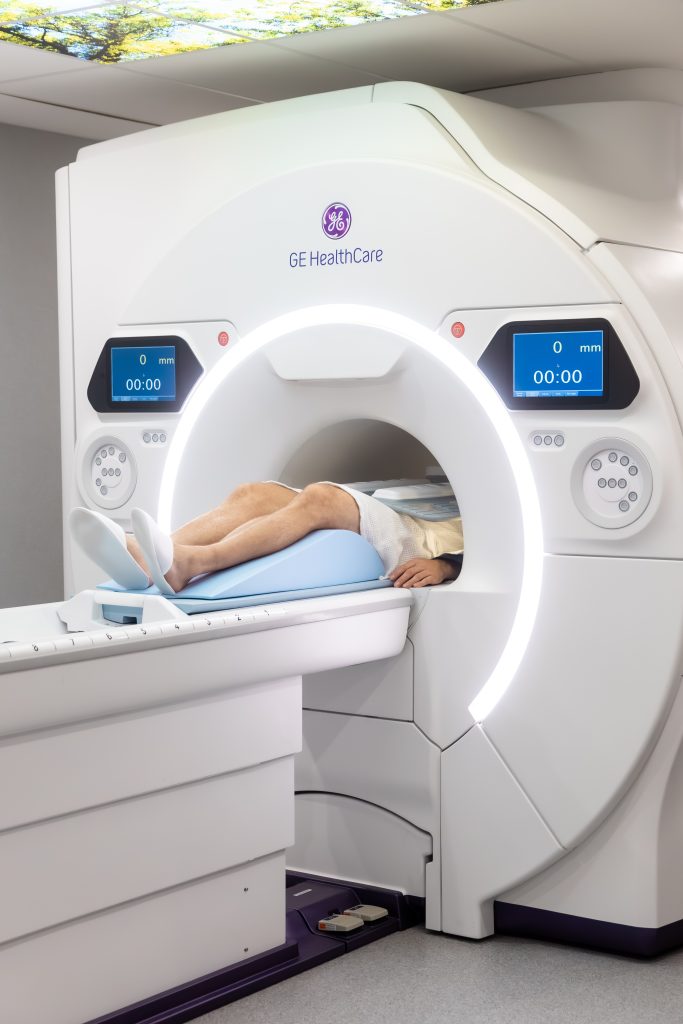
Guided by the technician, you will lie flat on the padded table of the CT scanner. It is important to stay still during the scan, so the technician will ensure that your position is as comfortable as possible.
They will then place a series of electrodes on your chest. These are necessary as the scanner captures images in sync with your heartbeat.
Enter the scanner
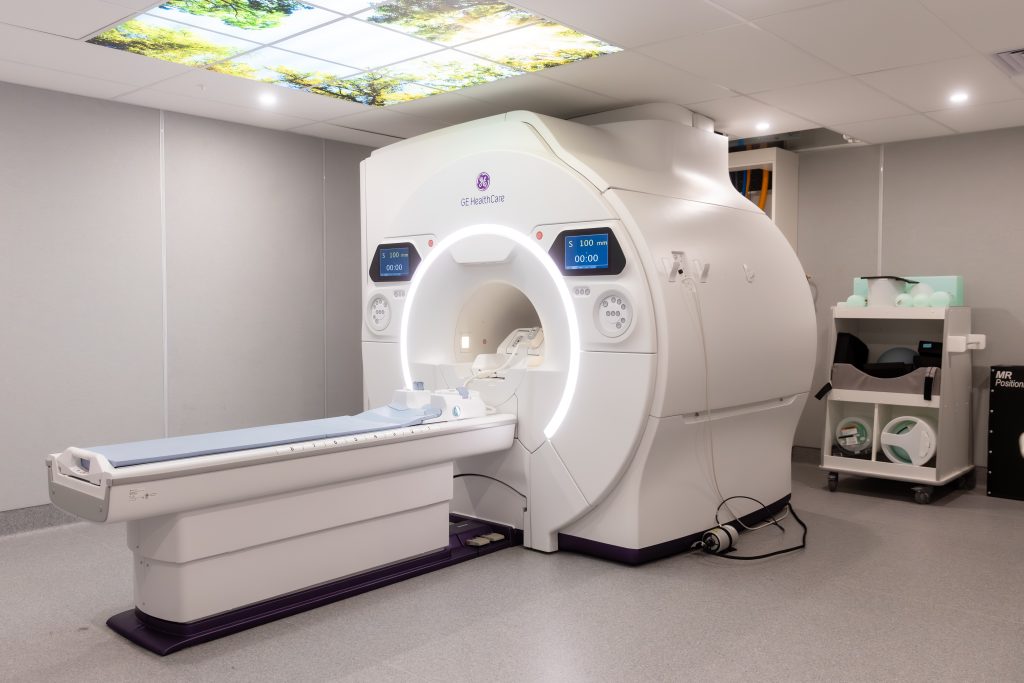
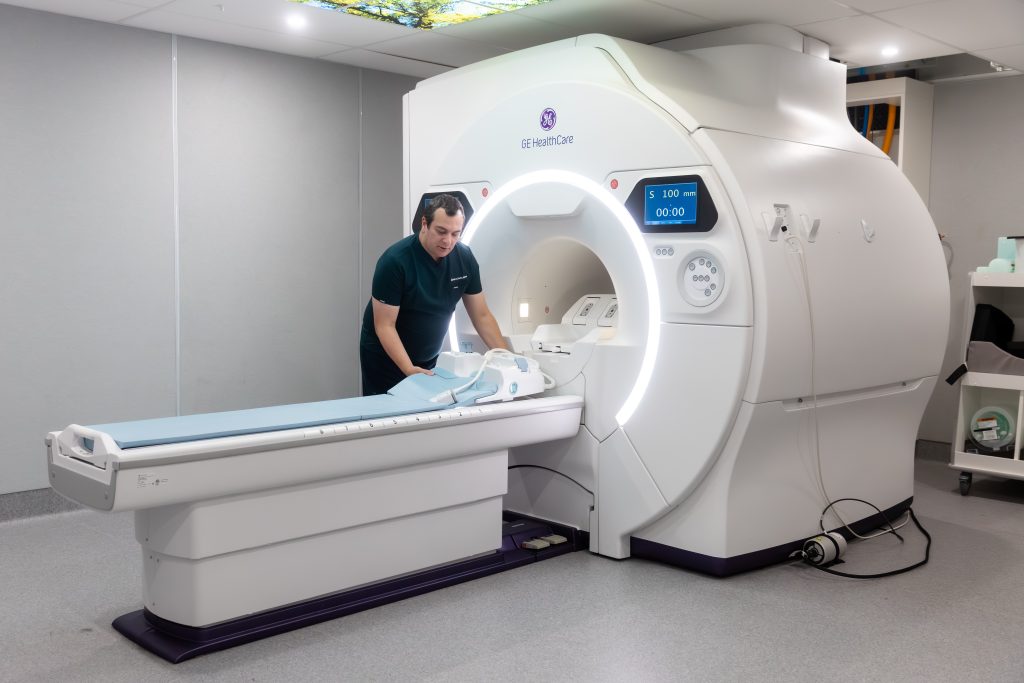
The padded table will automatically slide slowly into the scanner. The scanner looks a little like a doughnut turned on its side and will hum faintly. The longer tunnel-like scanners you may imagine are actually MRI scanners, which are used for different procedures. Remember, lie as still as possible while in the scanner.
The CT scanner looks like this.
Follow instructions
Your technician will give you a few simple instructions to follow to ensure the best results from the scan. For example, you will be asked to hold your breath for a few seconds at a time; this further reduces movement, ensuring the scans are as accurate as possible.
Complete the scan
Once the scan is complete, the table will slide back out, and your technician will remove the electrodes. You can then sit up and exit the scanning room.
Post-test
You won’t need to stay in the clinic or take any precautions after the test. You’ll be able to walk straight out the door and carry on your day as normal. When we have your results, you’ll have a follow-up with your physician, who will talk you through the results and recommend any next steps.
Understanding if calcium score tests are safe
It’s normal to have questions about safety when it comes to a medical test – especially one that involves imaging and radiation. The good news is that calcium score testing is considered a low-risk, non-invasive procedure. Let’s answer some of the other questions that you may have about the procedure.
How much radiation is involved?
A CT calcium score scan uses very low levels of radiation. It’s comparable to the amount of natural background radiation you are exposed to in ordinary life over a couple of months.
Modern scanning machinery is able to produce clear, accurate images with very low levels of radiation. For most people, the benefits of getting detailed information about their heart health outweigh the very low risk from the procedure.
Will I need injections or dyes?
No, there are no invasive elements to the calcium score test. So, you won’t need any intravenous lines, needles, or contrast dyes. You simply lie still in the scanner with a few electrodes affixed to your chest, and the machine does the rest.
Is the test painful or uncomfortable?
No, the procedure is very comfortable and painless. The only requirements are lying still and occasionally holding your breath for a few seconds to help attain the most accurate images. Otherwise, the procedure is straightforward.
How reliable is the test?
Calcium score screening in Australia – and internationally – is a standardised and well-established test. The scan is performed by qualified, trained medical professionals who follow strict protocols.
Calcium scoring is also supported by extensive international clinical research and is recognised in Australia by organisations such as the National Heart Foundation of Australia. In a position statement published in the Medical Journal of Australia, the Heart Foundation acknowledged calcium scoring as a valuable tool for improving cardiovascular risk assessment in selected patients.
Does it replace other heart health tests?
No. The test isn’t absolute when it comes to detecting all forms of heart disease. It targets a specific form of plaque, so it can be part of a broader cardiovascular assessment. Depending on your risk factors, your physician may recommend additional investigations.
Understanding calcium score numbers
The calcium score test measures the build-up of calcified plaque in your arteries and assigns a numerical value to the result. The higher the score, the greater the likelihood of plaque build-up and, as a result, the higher the potential risk of future cardiovascular disease.
However, it’s important to remember that your calcium score is not the be-all and end-all. It is not used in isolation. Your physician will incorporate it into their analysis of your situation, alongside factors such as lifestyle, family medical history, and age. This will guide decisions around prevention, lifestyle changes, and whether further investigation or treatment may be required.
Calcium scores and what they mean
| Calcium score | What it indicates | Risk level |
| 0 | No detectable calcified plaque | Low |
| 1 – 99 | Small amounts of plaque | Mild |
| 100 – 399 | Some plaque build-up | Moderate |
| 400+ | Significant plaque accumulation | High |
How to book a calcium score test at HealthScreen
The calcium score test is included in HealthScreen’s diagnostic programs. These programs involve a range of assessments conducted over one day, and give you an in-depth snapshot of your current health status. From a physical examination to blood analysis and non-invasive scans, a diagnostic program establishes your baseline health and identifies any risk factors.
We also offer longevity memberships. These are subscriptions that provide ongoing guidance and treatments. They include regular comprehensive health check-ups, and you can request a calcium score test as part of that procedure. Memberships can also provide access to monthly wellness therapies, longevity supplements, and IV vitality infusions.
If you’d like to book a calcium score test, please get in touch with our client concierge team.
Ready to take control of your heart health?
If you want to be proactive when it comes to your heart health, a calcium score test can be very valuable.
Whether you have mild symptoms, specific medical or lifestyle risk factors, or are simply looking for peace of mind and guidance about preventative steps to take in order to minimise your future risk, having a data-led snapshot of your heart health is extremely valuable.
At HealthScreen, our qualified medical team can ensure you get the most out of your test, so you feel confident moving forward. Find the right program for you to get started with HealthScreen.
FAQ
What is a calcium score test?
A calcium score test is a specialised CT scan that is used to detect the levels of calcified plaque in the arteries that supply blood to your heart.
This information – provided as a score – can help a qualified medical professional assess your risk of future cardiovascular events, such as a heart attack or coronary artery disease. In turn, this feeds into a tailored plan that gives you the tools to take a proactive approach to protecting your heart health.
Who should get a calcium score test?
Anyone interested in having a proactive assessment of their cardiovascular health and future risk profile should consider a calcium score test.
It gives you a clearer understanding of your cardiovascular health, especially if you already have risk factors, such as a family history of heart disease, high blood pressure, or a history of smoking.
How long does a calcium score test take?
One of the most common questions we receive is how long a calcium score test takes. Generally, our calcium score tests last around 30 minutes. There is very little preparation required, and no recovery period afterwards. So you could gain detailed information about your health during your lunch hour.