What Is Body Composition?
Medically reviewed by Dr David Badov, Medical Director, MBBS FRACP
Body composition is the breakdown of what your body is made of: muscle mass, body fat, water and (separately) bone density, rather than just total weight. It tells you far more about health risk than weight or BMI alone, because two people at the same weight can have very different muscle-to-fat ratios and very different risk profiles.
Why body composition beats BMI
| BMI | Body composition scan | |
|---|---|---|
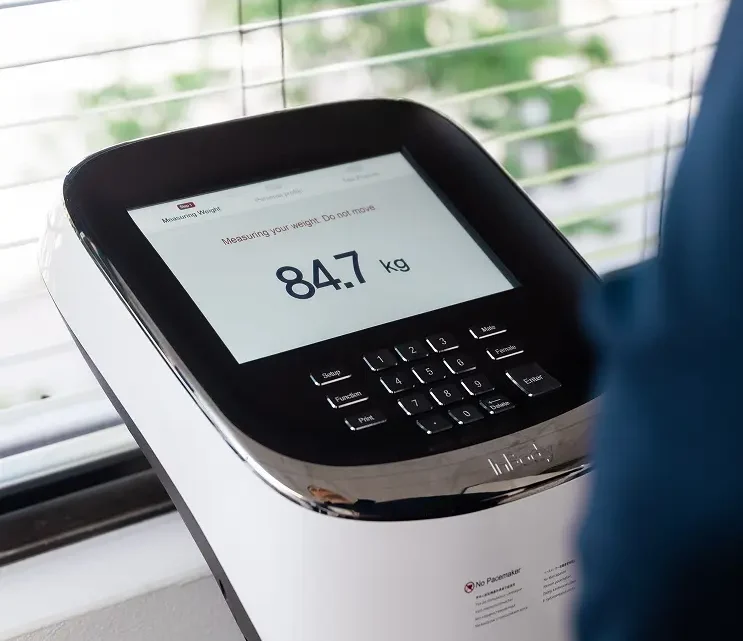
| What it uses | Height and weight only | Bioelectrical impedance (InBody970) measuring fat, muscle and water directly |
| Distinguishes muscle from fat | No | Yes |
| Flags visceral fat | No | Yes |
| Useful for tracking training/nutrition changes | Limited | Yes: segmental, repeatable metrics |
| Time required | Instant calculation | A few minutes, non-invasive |
What a body composition scan actually measures
- Skeletal muscle mass: broken down by body segment (arms, legs, trunk)
- Body fat percentage and mass: including visceral fat, a stronger cardiometabolic risk marker than total weight
- Total body water: a signal for hydration status and, at extremes, inflammation
Bone mineral density is measured separately via a dedicated DEXA scan, not the InBody body composition scan.
Common mistakes
- Comparing your fat percentage to friends without matching age and sex, since healthy reference ranges differ by both.
- Testing after a heavy meal or intense exercise session, both of which skew bioelectrical impedance results. HealthScreen recommends fasting for 2 hours and avoiding exercise for 12 hours beforehand.
- Treating one reading as the verdict rather than tracking trend over repeat scans.
How it fits at HealthScreen
Body composition analysis (InBody970) is a $120 optional add-on to the HealthScreen Program, and included in the Platinum Program.
DEXA is not part of this add-on, and is only done if your doctor identifies a clinical need for it during your consultation.
Body Composition FAQs
Is a body composition scan the same as a DEXA scan?
No, a body composition scan is not the same as a DEXA scan. Body composition is a general measure of what your body is made of: fat, muscle and bone. A DEXA scan (Dual-Energy X-ray Absorptiometry) can also be used to assess body composition, but its main purpose is measuring bone density, and it involves X-ray radiation that isn’t necessary just for a body composition read. InBody uses bioelectrical impedance and is radiation-free.
What does a body composition scan show?
A body composition scan gives you several InBody metrics. Skeletal muscle mass is the weight of the muscle you can actively train and grow at the gym. Body fat mass is the total weight of all the fat in your body, and percent body fat is that fat mass divided by your total weight. Visceral fat level is an estimated score, typically 1 to 20, for the fat stored around your internal abdominal organs.
It also covers segmental lean analysis, a breakdown of how many kilograms of muscle sit in five zones (left arm, right arm, torso, left leg and right leg) to flag any imbalances; total body water, split into intracellular water (inside your cells) and extracellular water (outside them) to check for inflammation or bloating; and basal metabolic rate, the exact number of calories your body burns at rest just to keep you alive.
Is a body composition scan safe?
Yes, it is 100% radiation free as it uses low-level electrical current and is non-invasive.