Will an MRI Show Cancer? Early Detection, Explained
Medically reviewed by Dr David Badov, Medical Director, MBBS FRACP
A targeted MRI can help detect a number of cancers before symptoms appear, but no single scan detects every cancer, and a normal result does not guarantee the absence of disease. This is general health information, not a substitute for individual medical advice. Always discuss your personal risk factors and screening needs with your doctor.
What can a targeted MRI help screen for?
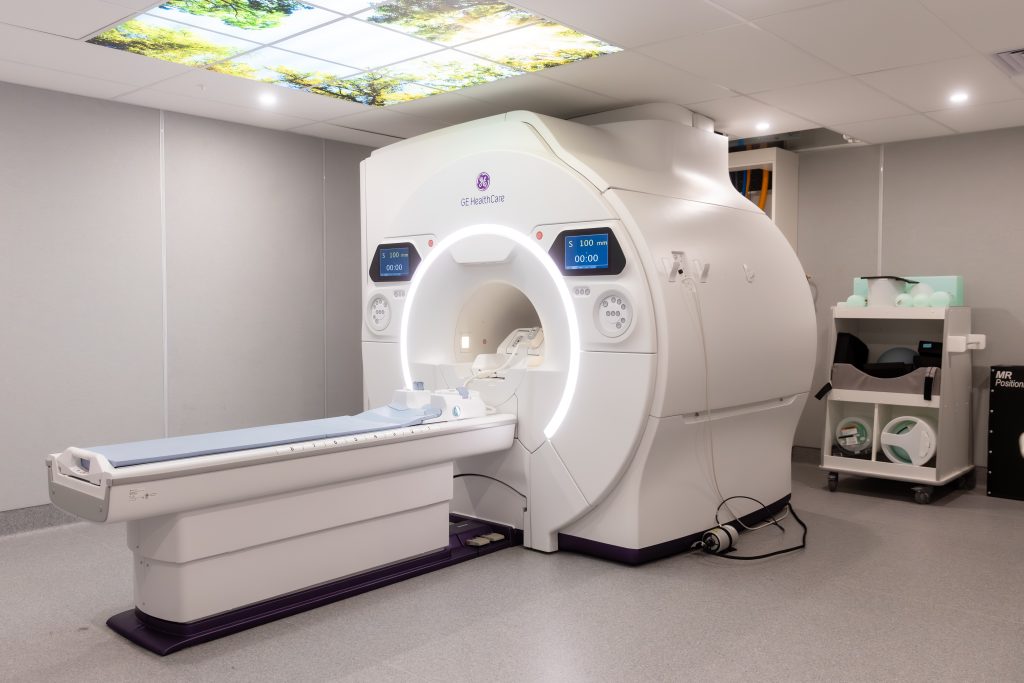
At HealthScreen, targeted MRI is used as part of a broader diagnostic program to support early screening for several cancers, including ovarian, pancreatic, prostate, liver, lung, brain and thyroid cancers, as well as brain aneurysms and some cardiovascular structural findings. MRI is radiation-free, using magnets and radio waves rather than ionising radiation, which is one reason it’s used for repeat or preventative screening.
What a targeted MRI does not cover
MRI is not the right tool for every cancer type. Bowel, stomach and oesophageal cancers are not screened via MRI at HealthScreen; they require a colonoscopy or gastroscopy, offered as a separate, optional part of your assessment. Lung cancer screening also uses a dedicated low-dose CT chest scan rather than MRI: CT chest is the clinical gold standard for lung screening, and HealthScreen offers it if clinically indicated. Cervical and breast cancer screening also rely on dedicated, guideline-based tests (cervical screening and mammography) rather than whole-body MRI.
Decision guide: which scan is used for what
| Modality | Best suited to | Radiation | Available at HealthScreen |
|---|---|---|---|
| Targeted MRI | Soft-tissue and organ abnormalities (e.g. brain, liver, prostate, thyroid) | None | Yes, part of core diagnostic program |
| CT Coronary Calcium score | Arterial calcification / cardiovascular risk | Low-dose | Yes, if clinically indicated |
| Colonoscopy / gastroscopy | Bowel, stomach, oesophageal cancers | None (endoscopic) | Yes, an optional add-on |
| Ultrasound (carotid/thyroid) | Blood flow, thyroid structure | None | Yes, part of core diagnostic program |
Common mistakes people make
- Assuming a clear MRI result means “no cancer risk” going forward. It’s a point-in-time finding, not a lifetime guarantee.
- Skipping guideline-recommended screening (like mammograms, cervical screening or bowel screening) because they’ve had an MRI. These use different technology for a reason: MRI doesn’t replace them.
- Not disclosing family history before the scan, which affects what your physician recommends as clinically indicated.
Limitations, honestly
No imaging test, including MRI, has 100% sensitivity. Small or early-stage lesions can be missed, and MRI findings are reviewed and reported by a radiologist before being discussed with your physician, who interprets results in the context of your personal risk profile. This is why HealthScreen’s process includes a physician follow-up, not just a scan report.
FAQs
Can an MRI cause cancer?
No. MRI does not use ionising radiation; it uses magnetic fields and radio waves, which is one of the reasons it’s considered appropriate for repeat preventative screening (always confirm suitability with your doctor).
Will an MRI definitely find cancer if I have it?
No test can guarantee this. MRI improves the odds of early detection for the cancers it’s suited to, but no scan is 100% sensitive, and normal results don’t rule out disease.
Does a targeted MRI check for bowel cancer?
No- bowel, stomach and oesophageal cancers are screened via colonoscopy or gastroscopy, available as an optional part of HealthScreen’s programs, not via MRI.