The Executive’s Guide to Preventative Health
Medically reviewed by Dr David Badov, Medical Director, MBBS FRACP
Executive preventative health means running the diagnostics that actually predict long-term risk (advanced imaging, a full biomarker panel, cardiac screening) rather than relying on a standard annual check-up. For most executives, that testing fits into a single on-site day, so time pressure stops being the reason it gets skipped.
The tests that matter, and why
| Test | What it’s for | Why it matters for executives specifically |
|---|---|---|
| Targeted MRI | Early detection across major organs, cancers and structural abnormalities | Radiation-free, safe for annual/repeat use |
| 100+ biomarker blood panel | Metabolic, hormonal, inflammatory and nutritional status | Chronic stress and travel can mask early metabolic strain |
| ECG (+ CT calcium score if indicated) | Cardiac rhythm and arterial risk | Cardiovascular risk compounds with age and sustained stress |
| Carotid and thyroid ultrasound | Stroke risk, thyroid structure | Often asymptomatic until advanced |
How often to screen
An annual comprehensive assessment is the standard recommendation, with your physician determining whether specific biomarkers or imaging need repeating sooner based on your results and risk profile.
How it fits into one day
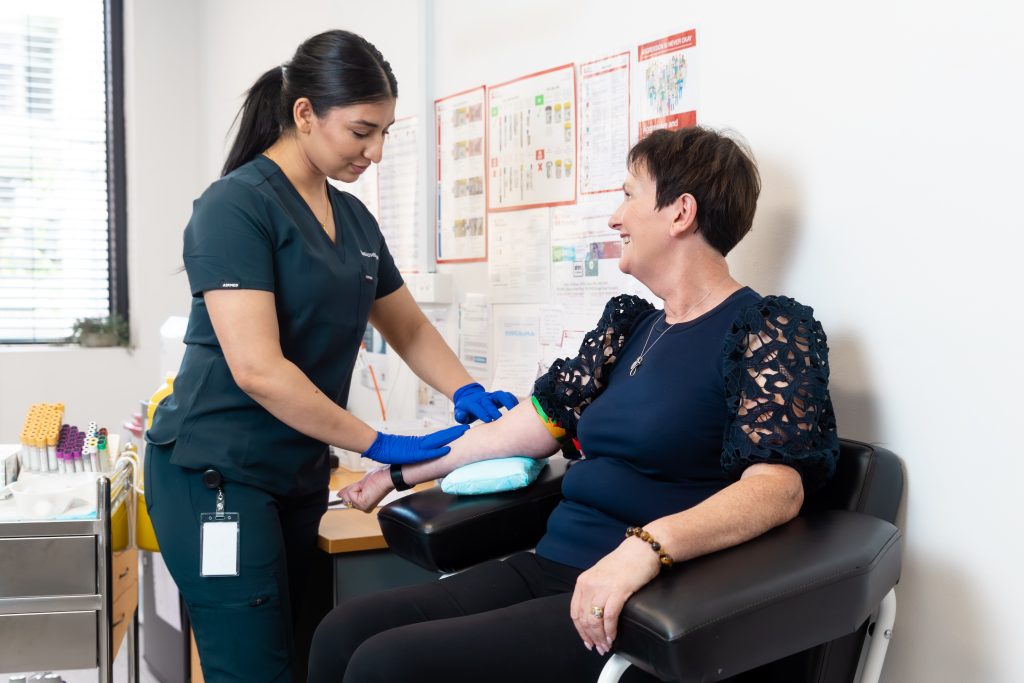
Day 1 is a single 3-4 hour on-site session covering the physical exam, imaging, ultrasounds and blood draw. Results are compiled over roughly two weeks, then reviewed with your physician via a 14-day telehealth follow-up, with optional nutrition consultations at months 3-9 and a final review at month 12.
The business case, not just the personal one
Absenteeism costs Australian businesses an estimated $25.7 billion a year according to Medibank. They also found businesses save up to $5.81 for every $1 invested in corporate health through reduced absenteeism and increased productivity.
Separately, 61% of Australian employees rate health benefits as an important factor in choosing an employer (Australian HR Institute, 2023), and PwC Australia (2023) links employee wellbeing investment to a 25% productivity increase and 40% lower turnover.
Under ATO Class Ruling CR 2026/38, HealthScreen’s core executive diagnostics (physician exam, 100+ biomarker analysis, targeted MRI and physician follow-up) are treated as an exempt fringe benefit when offered as work-related medical screening, from 1 April 2026 to 31 March 2029, so it is worth raising with your finance team.
(FBT treatment depends on how the benefit is structured; confirm your position with your own tax adviser.)
Common mistakes executives make
- Treating an annual GP visit as equivalent to comprehensive screening. A standard GP check doesn’t typically include imaging, a 100+ biomarker panel or cardiac risk profiling.
- Waiting for symptoms. Most of what advanced screening looks for (cardiovascular strain, early-stage cancers, metabolic dysfunction) is asymptomatic until later stages.
HealthScreen’s executive programs are already used by teams at organisations including Pitcher Partners Queensland, Midfield and IXOM. Full program detail is on our executive health page.
Executive Health Screening FAQs
How long does an executive health check take?
The core diagnostic day is 3-4 hours on-site; follow-up consultations are via telehealth.
Is executive health screening fringe benefit exempt?
HealthScreen’s core diagnostics are treated as an exempt fringe benefit under ATO Class Ruling CR 2026/38 (1 April 2026 – 31 March 2029) when offered as work-related medical screening. Confirm your specific position with your tax adviser.
Will my employer see my results?
No. Results are reported directly and confidentially to the individual, never the employer.