There are some cancers where blood tests can detect substances in the blood that may be linked to cancer, sometimes before symptoms develop. These tests measure biomarkers released either by cancer cells or by the body in response to cancer, and some of these biomarkers may be ordered or discussed depending on family history or clinical indication.
While these tests don’t offer a fully guaranteed way to identify cancers, they do provide some helpful information that allows your physician to be more targeted with additional testing. This often comes in the form of other scans or biopsies.
For many patients, the idea of detecting signs of cancer before symptoms appear can feel reassuring. However, these tests can also raise questions about how well these results can predict cancer.
In this article, we’ll explain how cancer marker blood tests work, what common cancers they scan for, the limitations of this technology, and what patients can expect from the process.
Key takeaways
- Blood tests can be useful as part of a wider program to help identify biomarkers linked to certain cancers
- Tests can’t diagnose or rule out cancer on their own and should be part of a wider health program
- Their results are useful when reviewed alongside your wider health profile by a physician
How does a cancer marker blood test work?
A cancer marker blood test works by analysing a blood sample for abnormal biomarkers that could be potential cancers. This is often determined from substances such as proteins or DNA fragments released by cancer cells or by the body in response to them.
The process itself is as simple as any other blood test. A sample is collected and sent to a laboratory, where it is assessed for specific biomarkers. Depending on the results, additional tests may be suggested to further investigate the findings.
It’s important to note that elevated cancer markers do not automatically mean someone has cancer. In many cases, these levels can be influenced by inflammation, infection, or other non-cancerous conditions, which is why results are always reviewed alongside your wider health profile.
While we can identify some abnormal biomarkers, there is growing research into newer blood-based screening technologies, including the large NHS-Galleri trial currently running in the UK. This test is investigating whether a blood test can help detect signals linked to more than 50 types of cancer before symptoms appear.
What can and can’t a cancer marker blood test do?
Blood tests for cancer markers are part of a wider healthcare program. They can initiate further testing and are reviewed alongside other health results. With that in mind, here’s what you can and can’t expect from a cancer marker blood test.
Cancer marker blood tests can…
- Flag possible abnormalities that require further investigation
- Monitor known cancers or check for signs of recurrence over time
Cancer marker blood tests can’t…
- Diagnose a patient with cancer
- Rule out cancer with complete certainty
- Replace scans, biopsies, or public cancer screening programs
While these tests can’t diagnose cancer on their own, they can prompt your physician to carry out more targeted screening.
Common cancer markers these tests may look for
There are many different cancer markers that we can test for with a blood test. There are typically two ways that we test the blood.
Here’s an overview of some commonly known cancer markers we test for.
| Test | What it may be associated with |
| PSA (Prostate-Specific Antigen) | Prostate cancer |
| Full blood count abnormalities | May help identify changes linked to blood cancers such as leukaemia |
At HealthScreen, genetic cancer risk screening may also be considered as part of a broader preventative health assessment. This involves analysing specific inherited gene variants linked to increased risk.
Any results from these tests will be interpreted within the context of a patient’s wider health profile and lead to further investigation if needed.
Why aren’t cancer marker blood tests always definitive?
Cancer marker blood tests can provide useful insights, but they are not designed to either confirm or rule out cancer on their own. This is because many cancer markers are not produced exclusively by cancer cells. In some cases, normal cells can also release these proteins or substances in response to inflammation, infection, tissue damage, hormonal fluctuations, or other conditions.
This means results can sometimes lead to false positives, where a marker is elevated without cancer being present. For peace of mind, it’s important to know this can happen. Cancer marker testing is reviewed alongside your wider health profile, helping physicians determine whether any further screening is needed.
What happens if my doctor orders a cancer marker blood test?
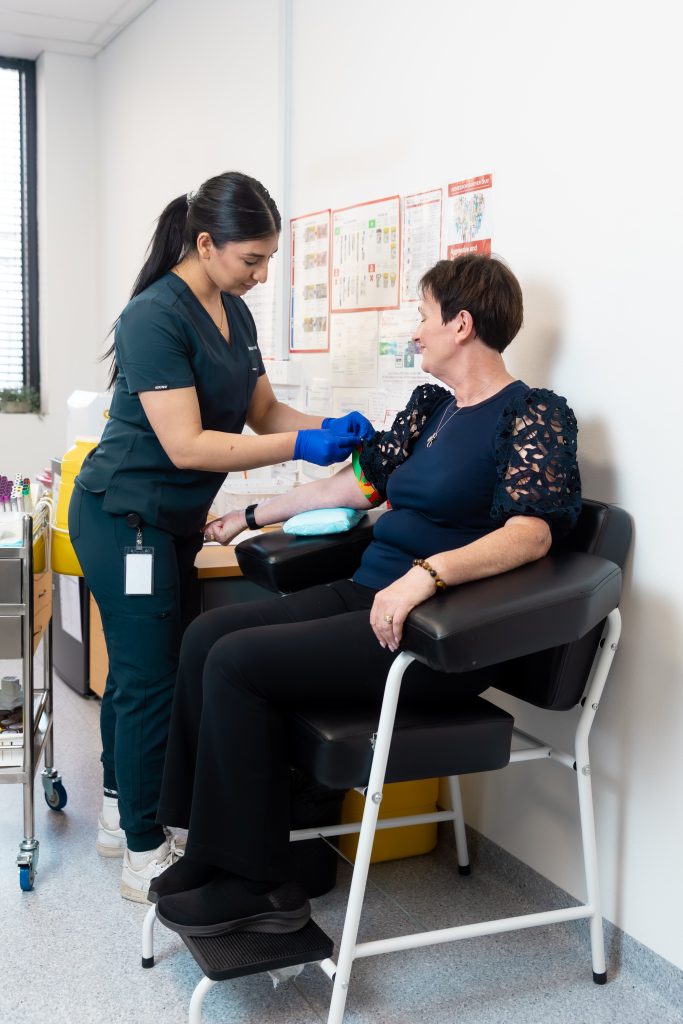
The process is exactly like a normal blood test and only takes a couple of minutes. You will always be supported by our client concierge team. If you have any concerns, they will be more than happy to help.
Here’s what patients can typically expect:
- Initial consultation: Prior to your blood test, your physician will have reviewed your health history, symptoms, family history, and any other risk factors.
- Choosing the right tests: Based on this information, they will determine which cancer marker tests may be appropriate.
- Blood sample collection: A small blood sample is taken on-site as part of your wider health assessment. Just like a normal blood test, we take the sample from your non-dominant arm.
- Results processing: Your sample will then be sent to the laboratory for analysis, with results typically coming back within a few days.
- Results review: Your physician will then review these results alongside your wider health profile
- Check in with the physician: You’ll have a follow-up appointment when all the results are back, where your physician will discuss whether any other screening may be appropriate.
Who are cancer marker blood tests suited for?
Cancer marker blood tests can be informative for nearly every patient. However, patients with the following factors might be particularly interested in receiving a test:
- Those with a family history of certain cancers
- Anyone concerned about inherited cancer risk
- Patients who want a more proactive and preventative approach to their health
- Individuals who have previously had abnormal findings or require ongoing monitoring
It’s important to understand that these tests are not a replacement for seeing a doctor if you are having symptoms.
If you notice anything unusual, please make sure to get these assessed promptly by a healthcare professional. For more information, visit the Australian government’s page on screening for cancer.
A proactive approach to cancer screening
Cancer marker blood tests provide additional insights for patients wanting to take a more proactive approach to their health. While they cannot diagnose cancer on their own, they may help identify where further screening or monitoring could be helpful.
At HealthScreen, cancer marker testing is offered as part of our 12-month, physician-led diagnostic programs. This means you’ll have ongoing support and a physician who can help you interpret your results and put them into the context of your health.
If you’d like to learn more about our preventative health assessments, you can book online or call 1300 031 300 to speak with our team.
FAQs
Can a blood test detect cancer before symptoms appear?
In some cases, yes. Certain cancer marker blood tests can detect biological signals linked to some cancers before symptoms develop. However, they are not designed to detect every cancer early and need to be used alongside other screening methods.
Can a normal result rule out cancer?
No. Some cancers don’t produce detectable markers in the blood, particularly in their early stages. This means normal results can’t conclusively rule out cancer.
What other tests might I need alongside cancer blood testing?
Cancer marker blood tests are often used alongside other screening tools like imaging, biomarker testing, and physical examinations. In other cases, we might refer you to public cancer screening programs.
What kinds of cancer can these tests detect?
These tests may detect markers linked to cancers such as prostate, ovarian, liver, pancreatic, bowel, and some blood cancers. However, they cannot definitively detect or rule out cancer, and instead may point to areas that require further investigation.
Can cancer marker blood tests be wrong?
Yes, false positives can happen with these tests because of inflammation, infection, and hormonal changes. These variables are why additional screening and a review from your physical will be required if anything unusual comes up.