


Medically reviewed by Dr David Badov, Medical Director, MBBS FRACP
HealthScreen’s Targeted MRI is a non-invasive, radiation-free scan, and its value goes well beyond cancer. It also looks for structural changes in the brain and abdomen, changes that often show up long before any symptoms do. Cardiovascular risk is assessed separately via a CT coronary calcium score, only performed where clinically indicated. If you’re specifically wondering what it can tell you about cancer risk, including which cancers it screens for and its limits, our guide to early cancer detection and screening covers that in full. Below, we look at everything else: the neurological and abdominal findings the scan picks up, and what happens between the scan itself and a physician reviewing your results.
What non-cancer conditions can an MRI screen for?
- Neurological: intracranial structures, screening for silent brain aneurysms, early vascular changes, or asymptomatic space-occupying lesions
- Abdominal and pelvic: liver, kidneys, pancreas, spleen, gallbladder, ovaries and prostate, screening for structural changes or cyst formation (not the same as the cancer-specific screening covered separately)
- Cardiovascular: structural cardiovascular risk assessed via a resting ECG and, where clinically indicated, a CT coronary calcium score (this is not part of the MRI itself).
How does the scan work?
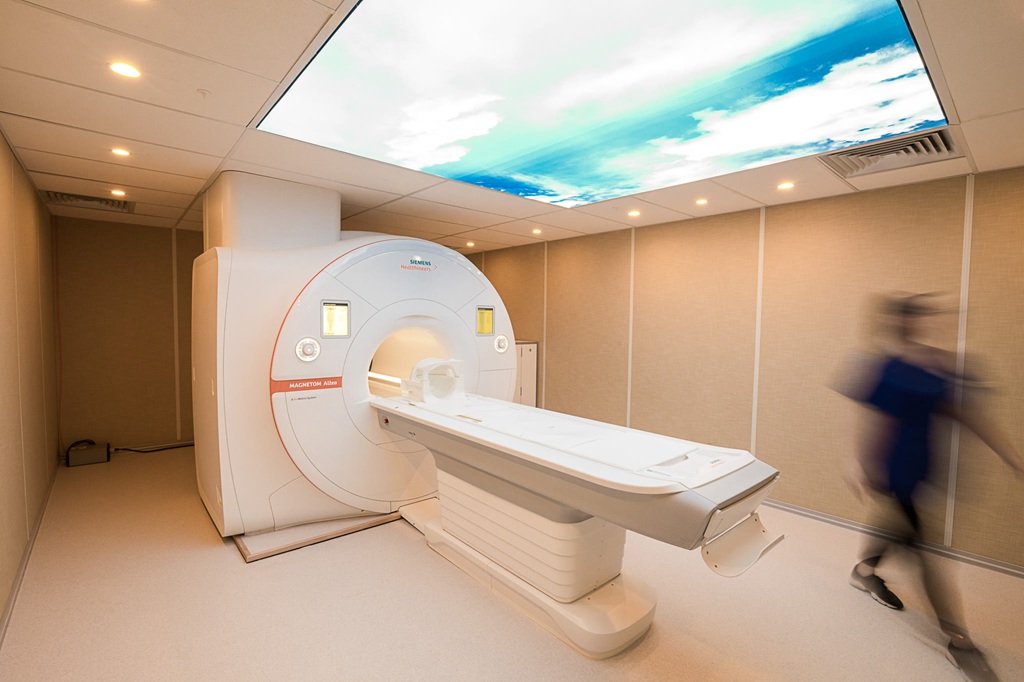
The scan itself takes up to one hour, tailored following an initial consultation and risk assessment. It’s non-invasive and radiation-free. Results are reviewed with your doctor around two weeks later. A cardiac CT (which involves small exposure to radiation) is only referred when clinically appropriate, not automatically for everyone.
What can’t a body scan tell you?
- It’s a screening tool, not a diagnosis. A finding may lead to further specifically targeted testing to clarify its extent, it isn’t the final word.
- No single scan can rule out every possible condition.
- It doesn’t replace ongoing GP care or existing specialist relationships.
How does this compare to other diagnostic options?
| Targeted MRI | Standalone blood test | GP referral pathway | |
|---|---|---|---|
| Coverage | Imaging across multiple organ systems in one session, where clinically necessary | One data point (e.g. cholesterol) | Situation dependent |
| Radiation | None (cardiac CT only if indicated) | None | Varies |
| Time to result | ~1 hour scan, ~2 weeks to physician review | Days | Varies, often weeks across referrals |
| Referral needed | No | Yes | Yes |
FAQs
Can an MRI scan detect a brain aneurysm?
Yes. It can support early detection of intracranial structural changes, including some aneurysms, though no scan detects every case.
Does it screen for spinal problems?
No, HealthScreen’s Targeted MRI does not include spinal screening.
Is the scan safe?
Yes, MRI is radiation-free and non-invasive. Cardiac CT, which does involve a small amount of radiation exposure, is only referred when clinically appropriate.
How long until I get results?
Results are reviewed with your doctor around two weeks after your initial appointment.
Do I need a referral?
No, you can book directly without a referral (see our FAQs).
What about cancer screening specifically?
HealthScreen also offers genetic panel testing as an additional test, which can identify predisposition to certain cancers and cardiac conditions.
Read more about this, including which cancers and its limitations, in our guide to early cancer detection and screening.
Full detail on the scan itself, including preparation and what’s involved, is on our targeted MRI scan page.